
Goddess Makosh
Slavic Goddess of Earth, Fertility, & Women's Crafts
About the Deity
Myths & Legends
Goddess Makosh
Domain
Earth
Attributes & Powers
Harvest, Spinning, Weaving
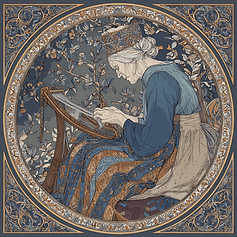
Makosh (sometimes rendered as Mokosh) is the ancient Slavic goddess of fertility, women’s work, and the earth, overseeing activities such as spinning, weaving, and childbirth while also guarding the harvest and the protective power of the soil. Often depicted as a matronly figure holding a spindle or a sheaf of grain, she embodies the nurturing and creative forces that sustain family and community life, linking the cycles of nature with the domestic sphere.
In folklore, Mokosh is invoked to ensure safe deliveries, abundant crops, and the smooth operation of household crafts, and her veneration was centered around sacred groves, riverbanks, and hearth altars where women offered bread, milk, or woven goods in gratitude. Her presence underscores the integral role of feminine divine energy in the balance of Slavic cosmology, complementing the more martial deities of sky and thunder.

Myths & Stories
In a well‑known Slavic tale, the earth goddess Mokosh watches over the lives of women and the fertility of the land, and one night she descends from the heavens to aid a grieving mother whose husband has been lost in a forest fire. Disguised as an elderly weaver, Mokosh sits beside the woman at her loom and gently guides her hands to spin a special thread of silver‑colored wool, whispering that each strand represents a prayer for safe return.
As the mother weaves, the loom emits a soft glow that spreads through the village, and the fire’s flames suddenly subside, revealing the husband unharmed among the ashes. Grateful, the couple offers Mokosh a wreath of fresh wheat and wildflowers, and the goddess returns to the sky, promising continued protection for all who honor the earth and its cycles.