Morozko
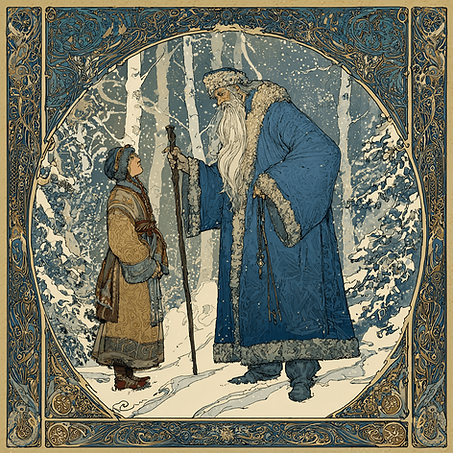
Slavic Grandpa Frost, or Ded Moroz, is the mythic ruler of winter who personifies the biting cold, frost‑bound rivers and icy winds of the season. In folklore he appears as a short, bearded old man wielding a staff that cracks the air, and his dual nature ranges from a fearsome, frost‑spreading deity to a benevolent figure who brings chilly blessings during the Yuletide celebrations.
A cracking frost flew in,
It breathed upon the little river.
Pale ice wrapped the light‑blue streams,
Enveloping them in a thin, frosty veil.
A. Fet
Slavic Winter Gift‑giver & Santa Claus
Meaning of Name
Ded Moroz literary means Grandfather Frost. Also called Morozko, Treskun, Studenets, he is a Slavic mythological figure, the ruler of winter cold, the personification of frosty winters, a blacksmith who freezes water.
Magical Powers
Ancient Slavs imagined him as a short old man with a long grey beard. His breath is a biting chill; his tears become icicles; hoarfrost is described as “frozen words”; his hair is likened to snow‑filled clouds. His spouse is Winter herself. In winter he runs across fields, forests, and streets, striking the ground with his staff; the sound of his blows makes the cracking frosts solidify rivers, streams, and puddles into ice.
Origins & Dual Nature
Originally, Ded Moroz was a cruel pagan deity, the sovereign of icy cold and blizzards who froze people. At the same time, a kinder image of Frost existed—living in an icy house, sleeping on a mattress of snow, and so forth. In winter this benevolent Frost also runs over fields and streets, tapping the ground; from his tap the crisp frosts arise and rivers become encased in ice. If he strikes a corner of a hut, a log will inevitably split.
Folkloric Associations
In Slavic legend, frosts were equated with fierce winter winds: the breath of Frost creates intense cold, and snow‑filled clouds are his hair. On the eve of Christmas people would call to Morozko: “Frost, Frost! Come and eat the jelly! Frost, Frost! Do not beat our oats, flax, and hemp into the ground!”

Morozko

"Morozko" by I. Bilibin (1931)