Rusalka
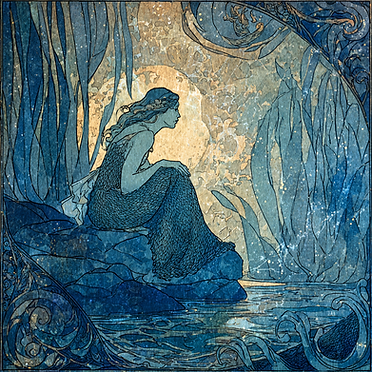
Rusalkas are Slavic water spirits—often portrayed as beautiful women with long hair who haunt rivers, lakes, and wells, sometimes possessing a fish‑like tail instead of legs. Folklore says they arise from drowned girls, unbaptised children, or those who died unnaturally, and they can lure or drown unsuspecting passersby, especially during the Kupala festivities. While some tales depict them as benevolent guardians of water, the dominant tradition casts them as malevolent, shape‑shifting entities that punish those who disrespect the water or ignore protective customs.

"I looked up: on the roof of my house stood a girl in a striped dress with loose braids—a real mermaid."
M. Y. Lermontov
Slavic Mermaid
Mermaids (rusalki, kupalki, vodyanitsy, etc.) are a class of humanoid water‑spirits in Slavic folklore, usually malevolent. They are thought to be soulless and yearning for a soul, yet unable to leave the sea. Girls who drown, people who bathe at forbidden hours, those seized by water‑spirits, and unbaptised children are said to become rusalki; male mermaids are also reported.
Appearance
Rusalki are most often depicted as beautiful women with long hair, though sometimes as shaggy, monstrous females. They may look indistinguishable from humans or sport a flat, fish‑like tail instead of legs. The conspicuous “excessive hair” is a hallmark trait distinguishing them from ordinary peasant girls.
The mermaid image blends water and vegetation, mixing traits of aquatic spirits with carnival figures (e.g., Kostroma, Yarila) whose deaths ensured a good harvest, suggesting a link to the realm of the dead.
Aquatic Habitat
Most of the year rusalki dwell in rivers, lakes, and wells. To keep children away from wells, elders warned, “Don’t go to the well or the mermaid will pull you in.” Their underwater homes are described as bird‑like nests, crystal palaces, or chambers of shells and gems. They are often seen on rafts or river stones, combing their hair with bone or iron combs, washing themselves, and diving away at the sight of a human. They also wash laundry with a pestle, then spread it to dry near springs.
Revival of the Ancient Goddess
Fragments of the old mermaid cult persisted in folk life, resurrecting the ancient goddess‑mediator between deities and earth, a wise spring‑time priestess. Emerging in the 18th century, this image combined the watery element (vodyanitsy, bereginy) with fertility‑spirit beliefs.
Ancestor Wells & Immortality
Slavs believed ancestors dwelt in wells where a “mermaid‑queen” guarded the water of immortality. By joining this life‑source, a human soul identifies with the deity and becomes a mermaid, merging the cult of the life‑giving goddess with ancestor worship. The mermaid’s purpose is to keep the immortal drink in heaven and bring it to earth.
In popular opinion rusalki are not merely the souls of the dead but the spirits of those who died unnaturally—murdered, suicided, cursed by mothers, or stolen by unclean forces.
Bird Symbolism
In early Slavic belief the mythic mermaid merged with swans and cuckoos, sometimes turning into a bird whose wings become the fabric of her white linen coverings. Spinning linen was a favorite pastime; finished cloths were laid near wells, washed in spring water, and stored in nests of straw and feathers on riverbanks. Swans, especially red‑haired maidens emerging from the sea, were viewed as light‑bearers and carriers of rejuvenating golden apples.
Shape-Shifters
Folklore says the mermaid fulfills divine will by transforming into a horse, mare, or bird. The horse symbolizes the union of fire and water (lightning that extracts “keys” from the earth), a motif echoed in wedding songs. This fiery‑watery horse conveys the life‑giving water that revives slain heroes, linking the mermaid to the “drink of immortality.”
"Rusala Week" & Festivals
During “Rusala week” (the week before or after Trinity), rusalki emerge from the water, run through fields, swing from trees, and may tickle passers‑by to death or drag them into the pond. Thursday is deemed the most dangerous (“great day of the rusalki”), so swimming was forbidden and travelers carried wormwood, which rusalki supposedly feared.
Ancient mermaid myths were revived in rites attached to summer and winter festivals. It is said that before sunset on Kupala (the summer solstice) mermaids bathe while a light rain falls and the sun shines. They love to sit on the rotating wheels of watermills, leaping into the water with shrieks and splashes.
Rusalka

Rusalka